
How to Choose a Hunger and Nutrition NGO for CSR in Nagpur

Choosing the wrong NGO for your hunger and nutrition CSR project is expensive. Not just in money, but in time, reputation, and missed impact.
I have seen it happen too many times. A company in Nagpur decides to address malnutrition or hunger as part of their CSR commitment. They find an NGO that looks good on paper. They transfer the funds. And then the problems begin.
Delayed execution. Poor documentation. Inflated beneficiary numbers. No impact measurement. Sometimes, the project simply does not happen at all.
By the time the company realises something is wrong, the financial year is ending, the CSR report is due, and they are scrambling to explain what went wrong to their board.
This article will help you avoid that situation. I am sharing a 15-point checklist that CSR teams can use to evaluate any hunger and nutrition NGO before signing an MOU. These are the same criteria that companies use when they partner with Marpu Foundation for nutrition projects across India, including in Nagpur and the Vidarbha region.
Let us get into it.
Why Hunger and Nutrition CSR Matters in Nagpur
Before we discuss how to choose an NGO, let us understand the context.
Nagpur is the third largest city in Maharashtra and the winter capital of the state. It is home to MIHAN, one of India's largest multi-modal international hubs. IT companies, manufacturing units, logistics firms, and PSUs have significant presence here.
But Nagpur is also surrounded by some of Maharashtra's most nutritionally vulnerable districts. Gadchiroli, Chandrapur, Gondia, Bhandara, and parts of Nagpur district itself have high rates of child malnutrition, anaemia among women, and food insecurity.
According to NFHS-5 data, Maharashtra has significant pockets where stunting, wasting, and underweight among children remain above national averages. The tribal belts around Nagpur are particularly affected.
This creates both a need and an opportunity for corporate CSR. Schedule VII of the Companies Act explicitly includes "eradicating hunger, poverty and malnutrition" as eligible CSR activities. Companies based in Nagpur can create meaningful impact by supporting nutrition interventions in their surrounding districts.
But the impact depends entirely on choosing the right NGO partner.
The 15-Point Checklist for Choosing a Hunger and Nutrition NGO
Here is the checklist. Go through each point before you finalise any NGO for your hunger and nutrition CSR project in Nagpur.
1. Valid Registrations and Compliance
Start with the basics. The NGO must have:
Valid Trust or Society or Section 8 Company registration
12A registration (for income tax exemption)
80G registration (for donor tax benefits)
CSR-1 registration on the MCA portal (mandatory for receiving CSR funds)
PAN and bank account in the name of the organisation
Ask for copies of all registration certificates. Verify the CSR-1 registration number on the MCA portal. If any of these are missing or expired, stop the conversation there.
2. Experience in Hunger and Nutrition Projects
General NGO experience is not enough. The NGO should have specific experience in hunger and nutrition interventions.
Ask for details of past projects:
What type of nutrition projects have they implemented?
How many beneficiaries were covered?
Which districts or areas did they work in?
What were the measured outcomes?
An NGO that has primarily done tree plantation or education projects may not have the expertise to run a nutrition programme effectively.
3. Understanding of Nutrition Science
Hunger and nutrition work requires technical knowledge. The NGO team should understand:
The difference between stunting, wasting, and underweight
Causes and consequences of micronutrient deficiencies
Age-appropriate nutrition interventions for different groups
Government nutrition schemes and how to complement them
Ask the NGO to explain their approach. If they cannot articulate a clear methodology, that is a red flag.
4. Local Presence in Nagpur or Vidarbha
A Delhi-based or Mumbai-based NGO may have great credentials, but if they do not have a local presence in Nagpur or the surrounding districts, execution will suffer.
Check if the NGO has:
An office or team members based in Nagpur
Existing relationships with local health workers, Anganwadis, and government officials
Experience working in the specific districts you want to target
Local presence ensures faster problem-solving, better community relationships, and more reliable execution.
Marpu Foundation, for example, operates across 23 states including Maharashtra, with teams that can coordinate projects in Nagpur and the Vidarbha region without depending on fly-in consultants.
5. Range of Nutrition Interventions Offered
Hunger and nutrition is not a single activity. A capable NGO should offer multiple intervention types:
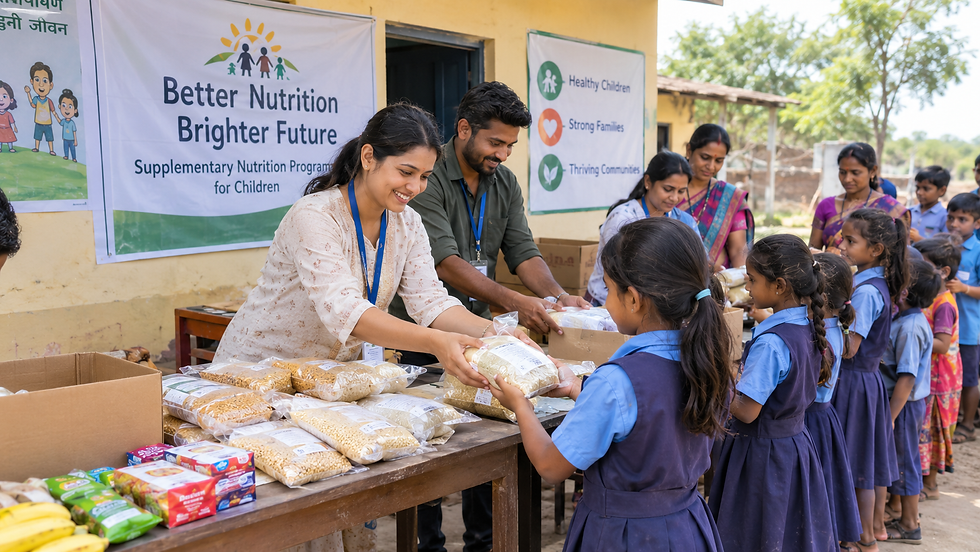
Supplementary nutrition distribution
Mid-day meal programmes
Community kitchen support
Nutrition awareness and counselling
Kitchen garden and food security programmes
Micronutrient supplementation
Growth monitoring and health camps
Support to Anganwadis and ICDS centres
The NGO should be able to recommend the right intervention based on your budget, target geography, and the specific nutritional needs of the community.
6. Clear Beneficiary Selection Criteria
Who exactly will benefit from your CSR funds? The NGO should have a clear methodology for:
Identifying target villages or urban pockets
Selecting beneficiary households or individuals
Prioritising the most vulnerable (children under 5, pregnant women, lactating mothers, elderly)
Avoiding duplication with government schemes
Ask for their beneficiary selection process. Vague answers like "we will identify the needy" are not acceptable.
7. Partnerships with Government Health Infrastructure
The best nutrition NGOs work in collaboration with government systems, not in isolation.
Check if the NGO has:
Relationships with district health officials
Coordination with Anganwadi workers and ASHA workers
Integration with ICDS, POSHAN Abhiyaan, or other government programmes
Government partnerships ensure sustainability. When your CSR project ends, the government system continues supporting the beneficiaries.
8. Transparent Budget and Cost Breakdown
Ask for a detailed budget with line-item costs. A good proposal should clearly show:
Cost per beneficiary
Food or supplement costs
Logistics and transportation
Human resources and coordination
Monitoring and evaluation
Documentation and reporting
Administration and overhead (typically 3-5%)
Be wary of NGOs that provide lump-sum budgets without detailed breakdowns. You should know exactly where your money is going.
9. Realistic Timelines
Nutrition projects take time. Child malnutrition does not reverse in one month. A credible NGO will propose realistic timelines:
Short-term feeding programmes: 3-6 months
Sustained nutrition interventions: 6-12 months
Behaviour change and awareness: Ongoing
If an NGO promises dramatic results in 30 days, they are either inexperienced or overselling.
10. Monitoring and Measurement Framework
How will you know if the project is working? The NGO should have a clear framework for:
Baseline assessment before the intervention
Regular monitoring during implementation
Endline assessment to measure change
Key indicators to track (weight gain, reduction in anaemia, dietary diversity scores)
At Marpu Foundation, we build monitoring into every nutrition project. Companies receive regular updates with data, not just photos.
11. Documentation and Reporting Standards
Your CSR committee and auditors need proper documentation. The NGO should provide:
Beneficiary lists with names and details
Distribution records with signatures or digital verification
Photographs and videos from the field
Periodic progress reports
Final impact report with outcomes
Utilisation certificate for funds
Ask to see sample reports from their past projects. The quality of documentation tells you a lot about the NGO's professionalism.
12. Financial Audit and Fund Utilisation History
Review the NGO's audited financial statements for the past 2-3 years. Look for:
Consistent programme expenditure
Reasonable administrative costs
No major audit qualifications or concerns
Proper utilisation of past CSR funds
If the NGO is reluctant to share financials, that is a serious red flag.
13. References from Past CSR Partners
Ask for references from companies they have worked with previously. A credible NGO will happily connect you with past partners.
When you speak to references, ask:
Was the project executed as promised?
Was documentation timely and accurate?
Were there any major issues?
Would you work with them again?
One or two reference calls can save you from a bad partnership.
14. Site Visit Readiness
Before finalising, ask to visit a project site where the NGO is currently working or has worked recently. A site visit helps you:
See their work on the ground
Meet beneficiaries and community members
Assess the quality of execution
Build confidence in the partnership
If the NGO discourages site visits or makes excuses, be cautious.
15. Alignment with Your Company Values
Finally, consider the fit with your company's CSR vision. Does the NGO's approach align with your values? Do they communicate in a way that works for your team? Are they responsive and professional?
CSR partnerships work best when there is mutual respect and alignment. You will be working together for months, possibly years. Choose an NGO you can trust.
Common Mistakes to Avoid
Based on what I have seen with companies in Nagpur and across India, here are mistakes to avoid when choosing a nutrition NGO.
1. Choosing based on lowest cost alone
The cheapest NGO is rarely the best. Low costs often mean poor quality food, inadequate monitoring, or inflated beneficiary numbers. Focus on value, not just price.
2. Not verifying registrations independently
Do not take the NGO's word for it. Verify CSR-1 on the MCA portal. Check 80G validity on the Income Tax website. Confirm registration details with the relevant authorities.
3. Ignoring local expertise
A big-name NGO from another city may have impressive credentials but struggle to execute in Nagpur's specific context. Local expertise matters.
4. Skipping the site visit
A site visit takes a few hours but can prevent months of problems. Always visit before finalising.
5. Not defining success metrics upfront
Agree on what success looks like before the project starts. How many beneficiaries? What outcomes? What documentation? Put it in the MOU.
Types of Hunger and Nutrition Projects You Can Support in Nagpur
Here are some project ideas that work well for companies in Nagpur:
1. Supplementary Nutrition for Children
Provide nutritious food to malnourished children in Anganwadis or schools. This can include energy-dense foods, eggs, fruits, and fortified supplements.
2. Community Kitchen Support
Support community kitchens that provide meals to daily wage workers, homeless individuals, or families in crisis. This is particularly relevant for urban Nagpur.
3. Nutrition for Pregnant and Lactating Women
Target the first 1,000 days window by providing nutrition support to pregnant women and new mothers in underserved areas.
4. Kitchen Garden Programme
Help families grow their own vegetables through kitchen garden kits, seeds, and training. This creates sustainable food security.
5. Mid-Day Meal Enhancement
Enhance the quality of mid-day meals in government schools by providing additional items like eggs, fruits, or milk.
6. Nutrition Awareness Campaigns
Conduct awareness sessions on balanced diet, dietary diversity, and healthy eating practices for mothers and adolescent girls.
Marpu Foundation runs all of these programme types across India and can customise projects based on your budget and focus areas.
How to Get Started
If you are ready to launch a hunger and nutrition CSR project in Nagpur, here is a simple process:
Step 1: Define your budget and target geography. How much do you want to spend? Which districts or areas do you want to focus on?
Step 2: Shortlist 2-3 NGOs using this checklist. Request proposals from each.
Step 3: Evaluate proposals on the 15 parameters above. Conduct reference checks.
Step 4: Visit at least one project site of your top choice.
Step 5: Negotiate terms and sign an MOU with clear deliverables, timelines, and reporting requirements.
Step 6: Launch the project with a baseline assessment.
Step 7: Monitor progress through regular reports and periodic visits.
Ready to Plan Your Hunger and Nutrition CSR Project in Nagpur?
If you are looking for a reliable NGO partner for hunger and nutrition CSR in Nagpur or the Vidarbha region, we would be happy to discuss options. Marpu Foundation has experience running nutrition programmes across India with proper documentation, impact measurement, and CSR compliance.
Write to us at connect@marpu.org


