
How to Verify if an NGO in India is Genuine Before You Donate
- Marpu Foundation

- May 2
- 12 min read
Most Indians who want to donate to an NGO get stuck at the same question. Is this NGO real? Will my money actually reach the people it's meant for? How do I know I'm not being cheated?
These are reasonable questions. India has thousands of registered NGOs, and not all of them operate with the discipline that donors expect. There have been enough cases of misuse, mismanagement, and outright fraud that even people who genuinely want to give now hesitate before pressing the donate button.
The good news is that verifying whether an NGO is genuine has become considerably easier in 2026 than it was even five years ago. Multiple government portals, public registers, and disclosure rules now make it possible for any citizen to check an NGO's credentials in 15 to 30 minutes, before donating a single rupee.
This article walks you through the full verification process. It covers every official portal you should check, every document you should ask for, every red flag that signals a problem, and the decision framework that helps you tell the difference between an NGO worth supporting and one to walk away from.
It is written for ordinary Indian citizens, donors, students, families, and senior professionals who want to give but want to give wisely. By the end, you will have a clear, repeatable process you can run before any future donation to any NGO.
Why Verifying an NGO Matters Before You Donate
Before getting into the how, it helps to understand the why.
Indian charitable organisations are governed by a strong regulatory framework, but the framework is only useful if donors actually use the disclosure mechanisms it creates. Verification protects three things at once.
It protects your money. A donation to a non-credible NGO often does not reach the cause it claims to serve. Funds get absorbed in administrative overhead, related-party transactions, or in some cases outright fraud.
It protects your tax position. If you claim a tax deduction under Section 80G of the Income Tax Act for a donation to an NGO that turns out to be deregistered or non-compliant, your deduction can be denied during scrutiny.
It protects the sector. Every donation that goes to a fraudulent or weak NGO reduces overall trust in Indian giving and makes it harder for serious NGOs to raise the funds they need. Donors who verify carefully are donors who shape the sector for the better.
Verification is not a sign of distrust. It is a sign of seriousness. Any NGO worth supporting will welcome the questions you ask.
The Eight Things You Need to Verify Before Donating
A complete NGO verification covers eight specific areas. Each one tells you something different about whether the organisation is genuine.
1. Legal entity registration 2. Permanent Account Number (PAN) 3. Section 12A registration under the Income Tax Act 4. Section 80G approval under the Income Tax Act 5. NGO Darpan registration 6. CSR-1 registration with the MCA (if the NGO accepts corporate CSR funds) 7. FCRA registration (only if the NGO accepts foreign contributions) 8. Audited financial statements and annual reports
Below, I walk you through how to verify each, and what each one tells you.
Verification 1: Legal Entity Registration
Every genuine NGO in India is a registered legal entity. There are three valid forms.
A Trust, registered under the Indian Trusts Act 1882 or the relevant State Public Trusts Act. Most older Indian charitable organisations are Trusts.
A Society, registered under the Societies Registration Act 1860 or its State variants (Karnataka, Maharashtra, Tamil Nadu, Telangana, and others have State-specific Acts). Societies are the most common form for community-based organisations.
A Section 8 Company, registered under the Companies Act 2013 (previously Section 25 of the Companies Act 1956). Section 8 companies are the most contemporary form, often used by professionalised NGOs and impact organisations.
What to ask for: A copy of the registration certificate. The certificate will name the registering authority (Registrar of Trusts, Registrar of Societies, or Registrar of Companies), the registration number, and the date of registration.
How to verify:
For Section 8 Companies, check the Ministry of Corporate Affairs (MCA) portal at mca.gov.in. Their public search lets you confirm registration with the company name or CIN (Corporate Identification Number).
For Societies, the State Registrar of Societies maintains the public register. Some states have online registers; others require an in-person verification request.
For Trusts, the registering authority varies by state, and verification is typically through the Sub-Registrar's office.
Red flag: An organisation that calls itself an NGO but has no formal registration. "We're working on it" is not an acceptable answer. A real NGO has documents.
Verification 2: Permanent Account Number (PAN)
Every legal entity in India is required to hold a Permanent Account Number issued by the Income Tax Department. The PAN is in the name of the entity itself, not the name of any office bearer or trustee.
What to ask for: A copy of the PAN card or PAN allotment letter, in the registered name of the NGO.
How to verify: The Income Tax Department's e-filing portal at incometax.gov.in has a PAN verification tool. You can confirm that the PAN is valid and active.
Red flag: A donation request that asks you to send money to an individual's bank account, or to a PAN registered in an individual's name rather than the organisation's name. Genuine NGOs receive donations only into the organisation's own bank account, linked to the organisation's own PAN.
Verification 3: Section 12A Registration
Section 12A of the Income Tax Act, 1961, grants an NGO income tax exemption on its surplus. Any genuine NGO that wants to operate at scale needs this registration.
What to ask for: A copy of the 12A registration certificate, which clearly mentions the registration number and validity.
How to verify: The Income Tax Department maintains a public exemption database. You can also ask the NGO for the URN (Unique Registration Number) issued under the latest registration scheme, and verify it on the IT portal.
What this confirms: The NGO is recognised by the Income Tax Department as a charitable organisation eligible for tax-exempt status.
Red flag: Absence of 12A is unusual for any Indian NGO operating at any reasonable scale. If the NGO claims to be working in a serious sector but does not hold 12A, ask them why.
Verification 4: Section 80G Approval
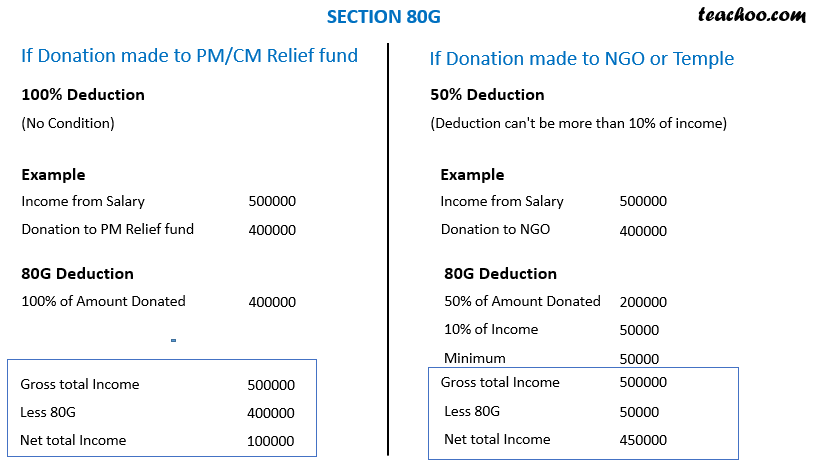
Section 80G is the registration that allows you, the donor, to claim a tax deduction on your donation. Without 80G, the donation is not eligible for any income tax benefit.
What to ask for: A copy of the 80G approval certificate. The certificate will mention the name of the approved NGO, the percentage of deduction allowed (50 percent or 100 percent of the donation amount, subject to the donor's gross total income limits), and the validity period.
How to verify:
Cross-check on the Income Tax Department's e-filing portal at incometax.gov.in. The portal hosts a verified list of 80G-approved entities.
Confirm that the certificate's validity period covers the financial year in which you are donating.
What you'll get when you donate: A 10BE certificate (or the equivalent receipt prescribed by the Income Tax Department) issued by the NGO after your donation. This is the document you submit when claiming the tax deduction during your IT filing. Without this certificate, you cannot claim the deduction.
Red flag: An NGO that says "we have 80G" but cannot produce the certificate, or whose certificate has expired and not been renewed. Both situations mean your tax deduction can be challenged later.
Verification 5: NGO Darpan Registration
NGO Darpan is the unique identification system maintained by NITI Aayog at ngodarpan.gov.in. It serves as the single signature register that links every Indian NGO to its registration, board, financials, and compliance status.
What to ask for: The NGO's NGO Darpan ID (also called Unique ID).
How to verify: Go to ngodarpan.gov.in. Use the public search to look up the NGO by name or by Unique ID. The Darpan profile will show you the registration details, the names and roles of the office bearers, the geographic scope of operations, and the historical record of any government grants received.
What this confirms: The NGO has gone through the trouble of getting itself listed on the central government's NGO register, which is a base-level credibility signal.
Note: NGO Darpan registration is mandatory for NGOs that receive central or state government grants. It is not strictly mandatory for NGOs that only receive private donations and CSR funds, but most serious NGOs maintain Darpan registration as a credibility signal regardless.
Verification 6: CSR-1 Registration with the MCA
If the NGO accepts corporate CSR funds, it must hold a CSR Registration Number, issued by the Ministry of Corporate Affairs after filing Form CSR-1. This requirement was introduced effective April 1, 2021, under the Companies (CSR Policy) Amendment Rules, 2021.
What to ask for: The NGO's CSR Registration Number (which begins with the prefix CSR followed by digits).
How to verify: On the MCA portal at mca.gov.in, you can search the CSR-1 register publicly. The registration shows the NGO's name, its registered address, and its current CSR-eligible status.
What this confirms: The NGO is currently registered to receive corporate CSR funds. Without this number, no Indian company can route CSR funds to the NGO, regardless of the NGO's other credentials.
Note for individual donors: CSR-1 is technically required only for NGOs accepting corporate CSR funds. If you are an individual donor giving from your own income, the NGO does not strictly need CSR-1 to receive your donation, but holding CSR-1 is a strong general credibility signal because it means the NGO has cleared the most rigorous of the three IT-and-MCA approval processes.
Verification 7: FCRA Registration (Only If Relevant)
FCRA (Foreign Contribution Regulation Act, 2010) governs the receipt of foreign contributions by Indian NGOs. If the NGO accepts foreign donations, it needs valid FCRA registration. If it does not, FCRA does not apply.
What to ask for:
If the NGO accepts foreign funding: a copy of the FCRA registration certificate.
If the NGO does not accept foreign funding: a written declaration to that effect (most serious Indian NGOs that operate purely on domestic funds will state this proudly on their website).
How to verify: The Ministry of Home Affairs (MHA) maintains the FCRA register at fcraonline.nic.in. You can confirm an NGO's FCRA registration status by name or registration number on the MHA portal.
Note: Many serious Indian NGOs choose not to register under FCRA. This is not a red flag. It is a deliberate choice to operate fully on domestic funds, which has its own credibility argument. The question to ask is not "do you have FCRA" but "what is your funding mix and where does it come from."
Verification 8: Audited Financial Statements and Annual Reports
This is the single most informative document set. The audited financials of an NGO tell you more about how it actually operates than any other document.
What to ask for:
Audited financial statements for the last three financial years (Income and Expenditure Account, Balance Sheet, and Receipts and Payments Account, signed by a practising Chartered Accountant)
The Auditor's Report for each of the three years
The Annual Reports for the last three years
ITR-7 acknowledgements (the Income Tax Return form for charitable organisations) for the last three years
What to look at in the financials:
Income mix. Where do the funds come from? Corporate donations, individual donations, foundation grants, government grants, foreign contributions? A balanced mix is generally healthier than complete dependence on a single source.
Expenditure pattern. What percentage of total expenditure goes to programmes vs administrative overhead? There is no single right number, but Indian NGOs operating at scale typically maintain administrative overhead between 10 and 20 percent. Numbers consistently above 25 percent merit a deeper look.
Programme spending. Do the programmes line up with the NGO's stated focus areas? Or are funds going to activities the NGO never publicly discusses?
Auditor qualifications or observations. A strong Auditor's Report is straightforward and clean. Auditor qualifications (specific concerns the auditor has raised) require a clear written explanation from the NGO.
Related-party transactions. Look for transactions between the NGO and entities related to its trustees, board members, or office bearers. These should be transparent and arms-length, not concentrated patterns.
Year-on-year consistency. Three years of statements should tell a coherent story. Sudden large jumps or drops in income or expenditure deserve explanation.
Where to find them: Many serious NGOs publish their annual reports and audited financials directly on their website. Look for an "Annual Reports," "Transparency," or "Financials" section. If the NGO does not publish these online, ask for them by email. A genuine NGO will share them within a few working days.
The Five Red Flags That Tell You to Walk Away
Beyond the verification steps above, five recurring patterns signal that an NGO is not worth supporting.
Red flag 1: They cannot or will not share documents. A genuine NGO has its registration certificates, 12A, 80G, audited financials, and annual reports ready to share within a few days of being asked. An NGO that delays, deflects, or refuses these requests is not transparent enough to deserve your support.
Red flag 2: The website is sparse, vague, or full of stock photography. Genuine NGOs document their work specifically. Real photographs from real programmes, named geographies, named partners, dated annual reports, named team members. Websites that are heavy on adjectives and light on specifics often correlate with thin operations.
Red flag 3: Fundraising appeals that play heavily on emotion without naming what the money does. "Save the children today" with a donate button and no explanation of which children, where, with what programme, with what outcome data, is a fundraising-first organisation. Genuine NGOs explain what your money does in operational detail.
Red flag 4: A single charismatic founder with no visible board or governance structure. Strong NGOs have visible boards, recorded resolutions, and governance processes that are bigger than any single person. Founder-led organisations without a substantive board are higher-risk because all decisions sit with one person, with no checks.
Red flag 5: Pressure to donate immediately. "This crisis ends today, donate now or it'll be too late" framing. Genuine emergencies do exist, but a pattern of urgency-driven appeals is often a fundraising tactic. Take your time. A real NGO can wait two weeks while you verify.
The 30-Minute NGO Verification Process
If you want a fast working process you can run before any donation, here is the structure.
Minute 0 to 10: Web search and website check
Search the NGO's name plus "controversy," "fraud," "complaint" and see if anything surfaces
Visit the NGO's website
Look for: Annual Reports, Audited Financials, Board / Governance, Programmes with specifics, Contact details
Note the NGO's NGO Darpan ID, CSR Registration Number, and 12A/80G if they're listed
Minute 10 to 20: Government portal cross-checks
Verify NGO Darpan ID at ngodarpan.gov.in
Verify CSR-1 registration at mca.gov.in if applicable
Verify 12A and 80G at incometax.gov.in (use the Exemption portal)
Verify FCRA at fcraonline.nic.in if applicable
Minute 20 to 30: Documentation request
Email the NGO and ask for the latest audited financials and annual report
Ask one specific operational question about their programmes (where are you working currently, how many beneficiaries last year)
Note how quickly and completely they respond
A genuine NGO will pass all 30 minutes with no friction. Anything that requires you to chase, follow up multiple times, or accept vague answers is telling you something important.
What a Strong NGO's Donor Communication Should Look Like
Beyond verification documents, the way an NGO communicates with you as a prospective donor tells you a lot.
Strong NGOs respond promptly to documentation requests. Within two to five working days for documents that are not on the website, faster for ones that are.
Strong NGOs send 10BE certificates (or the prescribed receipt) immediately after donations. Without you having to ask twice. This is the document you need for your 80G tax deduction.
Strong NGOs send programme updates regularly. Not just fundraising appeals. Quarterly or six-monthly updates with specific numbers, geographies, and outcomes.
Strong NGOs explain how your specific donation was used. Not in personalised detail (small donations are pooled) but in programme-level transparency that lets you see your funds in the broader work.
Strong NGOs are open to questions. If you ask "how does your administrative overhead compare with the sector," a strong NGO will explain. A weak NGO will deflect.
The Difference Between Donating and Making a Sustained Commitment
A final note that matters for repeat donors. The difference between a one-time donation and a sustained partnership with an NGO is significant. For a one-time donation, the eight verification steps above are enough.
For a sustained commitment (monthly recurring donations, annual giving programmes, larger gifts that you intend to repeat), it's worth investing additional time. Visit the NGO's office. Speak to a member of the board. Ask to attend a programme review or a field visit. Seek references from other long-term donors. Read three years of annual reports in detail rather than the most recent one alone.
Sustained commitments deserve sustained verification. The time invested upfront protects the years of giving that follow.
Why This Verification Process Matters for the Sector
The Indian NGO sector is large, diverse, and uneven in quality. There are genuinely exceptional organisations doing serious work. There are also weak, sometimes fraudulent, organisations that benefit from donor inattention. The difference between the two is often not visible until you look carefully.
When more donors verify before giving, three things happen. The strong NGOs get rewarded with sustained support. The weak NGOs lose access to funds they were not deserving of. And the sector as a whole moves toward higher transparency and stronger governance.
You are not just protecting yourself when you verify. You are voting for what kind of NGO sector India will have ten years from now.
About Marpu Foundation
At Marpu Foundation, we welcome donor verification at every level. Every document mentioned in this article, registration certificate, PAN, 12A, 80G, NGO Darpan ID, CSR Registration Number, audited financials, annual reports, is available either on our website or on email request within working hours. We do not accept foreign funding under FCRA, by deliberate choice, and have operated entirely on domestic funds since our founding.
We currently work with corporate partners across 23+ Indian states on programmes spanning environment, education, skill development, healthcare, and community development. Our 85 percent partner retention rate reflects the documentation discipline and transparency that long-term partners look for.
If you are an individual donor considering supporting Marpu, write to us at connect@marpu.org. We will share our latest annual report, audited financials, and a brief on the programmes you can choose to direct your contribution toward. You can also visit marpu.org to read our public documents directly.
If you are still verifying NGOs, run us through the eight-step process above. Every credential checks out. We expect the same of any NGO we partner with, and you should expect the same of any NGO you support.


