
CSR Project Ideas for Banking and Financial Services Companies in India

Banking and financial services companies sit at the centre of India's economy.
Your branches reach where many other industries cannot. Your customers cut across cities, small towns, and villages. Your CSR budgets are some of the largest in the country.
And when it comes to CSR, the BFSI sector has something most industries do not. You have daily visibility into the financial gaps that hold communities back. The customer who cannot open an account because of missing documents. The small business that cannot access credit. The senior citizen who has been defrauded online.
Your CSR can address what your business already sees.
This article shares practical CSR project ideas designed specifically for banking, NBFC, insurance, asset management, and broader financial services companies in India. Ideas that align with your strengths. Ideas that fit Schedule VII. Ideas that create measurable impact.
Why CSR Matters for Banking and Financial Services Companies
Before looking at specific ideas, it helps to understand why CSR carries extra weight for the BFSI sector.
The 2% mandate applies to most BFSI companies
Section 135 of the Companies Act 2013 makes CSR mandatory for any company with net worth above Rs 500 crore, turnover above Rs 1,000 crore, or net profit above Rs 5 crore. Most banks, large NBFCs, insurance companies, and asset management companies cross at least one of these thresholds. Many cross all three.
You see the financial gaps directly
Other sectors plan CSR from the outside. BFSI companies see exclusion every day. Your CSR can address what your business already sees, which makes the connection between your work and your CSR more credible than in most other sectors.
Your reputation depends on trust
Banks and insurance companies sell trust. CSR programmes that show genuine commitment to financial inclusion, fraud prevention, and customer protection strengthen the same brand that your products depend on.
You have unique scale advantages
A national bank has thousands of branches. An insurance company has millions of policyholders. CSR programmes designed at this scale can reach beneficiaries that smaller-scale interventions cannot.
Your employees expect it
Younger BFSI employees, especially in private banks, insurance, and fintechs, want to work for companies that do more than process transactions. A strong CSR programme is now part of how the sector attracts and retains talent.
Best CSR Project Ideas for BFSI Companies
Here are practical project ideas that fit the BFSI sector well.
1. Financial Literacy Programs for Underserved Communities
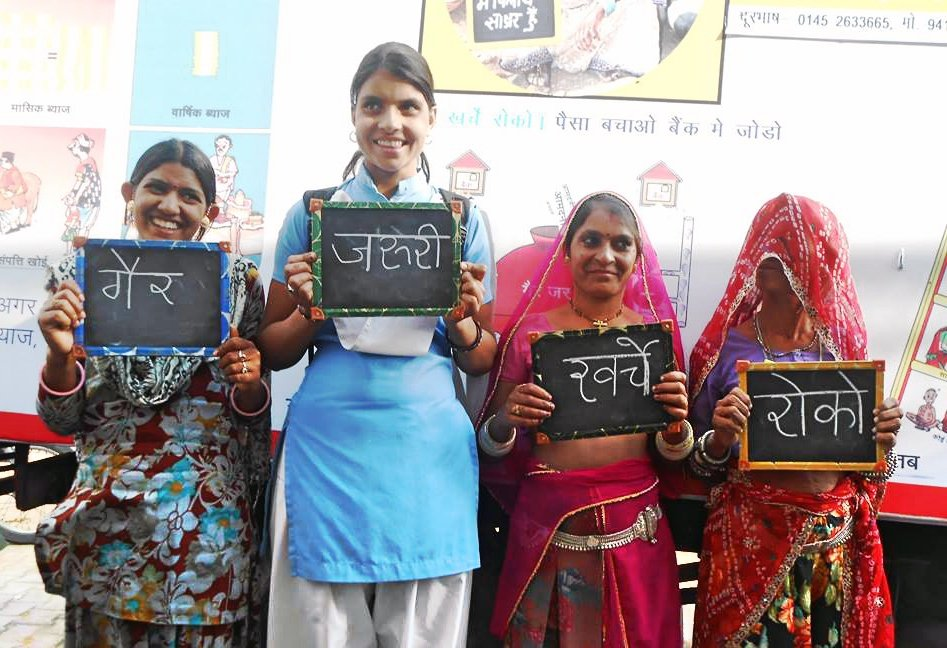
This is the most natural CSR area for BFSI companies. Millions of Indians still do not understand basic financial concepts.
What financial literacy programs can include:
→ Basic banking concepts: savings accounts, fixed deposits, recurring deposits→ Budgeting and household financial planning→ Understanding interest rates, EMIs, and loan terms→ Insurance literacy: what policies cover and how claims work→ Investment basics: mutual funds, government schemes, retirement planning→ Fraud awareness: common scams, OTP safety, phishing→ Tax basics for first-time earners
Why this works for BFSI companies:
Your employees explain these concepts to customers daily. They are natural trainers. The connection between your business and your CSR is direct and credible.
Who benefits:
Rural communities, urban informal workers, women, senior citizens, students entering the workforce, and first-time bank account holders.
2. Digital Banking Awareness for Rural Users and Senior Citizens
Digital banking has expanded faster than digital banking literacy. Many people who now have UPI accounts do not know how to use them safely.
What digital banking awareness programs can include:
→ How to use UPI for payments and transfers→ Setting up and protecting digital wallets→ Recognising and avoiding online banking fraud→ Safe online shopping and payment habits→ Using net banking and mobile banking apps→ Understanding charges, statements, and account alerts
Why this works for BFSI companies:
Reducing fraud and improving digital adoption helps your business directly. Customers who understand digital banking trust it more and use it more often.
Special focus areas:
Senior citizens are particularly vulnerable to digital fraud. Targeted programmes for older adults can significantly reduce financial harm in the communities your branches serve.
3. Support for Small and Marginal Farmers
Agriculture remains the largest livelihood source in rural India. Many farmers operate without formal banking access, fair credit, or insurance protection.
What farmer support programs can include:
→ Financial literacy designed for agricultural households→ Awareness about crop insurance schemes→ Help with documentation for Kisan Credit Cards→ Training on government schemes and subsidies→ Support for forming Farmer Producer Organisations→ Climate-resilient agriculture training→ Post-harvest storage and pricing literacy
Why this works for BFSI companies:
Banks already serve agricultural lending. Insurance companies already offer crop cover. CSR in this area strengthens the same rural economy your business depends on.
4. MSME and Micro-Entrepreneur Support Programs
Micro, small, and medium enterprises drive a major part of Indian employment. Most still struggle with credit access, formal registration, and financial planning.
What MSME support programs can include:
→ Business literacy and basic accounting training→ Help with GST registration and compliance→ Training on Udyam registration and government MSME schemes→ Credit literacy: how to prepare loan applications→ Digital tools for small business management→ Mentorship for first-generation entrepreneurs→ Market linkage support for small producers
Why this works for BFSI companies:
MSME lending is a core BFSI business. CSR support that builds financial readiness in this segment expands the customer base for the sector overall while creating real livelihoods.
5. Women's Financial Inclusion and Self Help Group Support
Women in India still face barriers to financial access. Self Help Groups and women-led enterprises remain one of the most reliable ways to build economic participation.
What women-focused financial inclusion programs can include:
→ Setting up bank accounts for women in unbanked households→ Financial literacy designed specifically for women→ Support for SHG formation and operation→ Microfinance literacy and responsible borrowing→ Skill training that leads to income→ Insurance awareness for women workers in the informal sector→ Digital payment training for women-led businesses
Why this works for BFSI companies:
Women's financial inclusion is a national priority. Programmes here align with Schedule VII gender equality activities and broader development goals.
6. Education and Scholarships for Underprivileged Students
Education is one of the most consistently high-impact CSR areas, and one of the easiest for BFSI companies to support.
What education programs can include:
→ Scholarships for school and college students→ Infrastructure support to government schools→ Library setup and learning material support→ Coaching support for competitive examinations→ Career guidance and counselling programmes→ Financial support for first-generation graduates→ Banking and finance education in schools and colleges
Why this works for BFSI companies:
Education is universally respected. It is also relatively easy to measure. Number of students supported. Drop-out rates reduced. Board examination results. These are clean metrics for board reporting.
7. Healthcare Access in Underserved Areas
Healthcare access remains a major gap across India, particularly in rural and remote regions.
What healthcare CSR projects can include:
→ Health camps and screening drives→ Mobile medical units for rural areas→ Eye check-ups and cataract surgeries→ Cancer awareness and early detection programmes→ Maternal and child health programmes→ Mental health awareness in workplaces and communities→ Health insurance literacy in low-income communities
Why this works for BFSI companies:
Healthcare projects are tangible and visible. Insurance companies in particular have a natural fit here, since healthcare protection is part of their core offering.
8. Skill Development and Employability Training
India's skill gap is well documented. CSR investments in skill training translate directly into employment and income.
What skill development programs can include:
→ Vocational training in market-relevant trades→ Digital and computer literacy→ Banking and BPO training programmes→ Soft skills and workplace readiness→ English communication training→ Industry-specific certification courses→ Placement support after training
Why this works for BFSI companies:
The BFSI sector itself has continuous demand for trained workforce: branch staff, agents, customer service teams, claims processing executives. Well-designed training programmes can also build a future pipeline for the sector.
9. Environmental and Sustainability Projects
BFSI companies have lower direct environmental footprints than manufacturing, but their financing decisions shape what gets built. Environmental CSR fits this responsibility.
What environmental projects can include:
→ Tree plantation drives in degraded areas→ Miyawaki forest plantations→ Solar power installations in schools and community buildings→ Water conservation and rainwater harvesting projects→ Waste management and recycling programmes→ Climate awareness campaigns→ Branch-level sustainability initiatives
Why this works for BFSI companies:
ESG reporting now matters for BFSI companies. CSR projects in this area also feed into broader sustainability disclosures and climate commitments.
10. Disaster Relief and Rehabilitation
India faces frequent climate-driven disasters: floods, cyclones, droughts, landslides. BFSI companies often have a national footprint that allows fast relief response.
What disaster relief programs can include:
→ Emergency relief supplies and shelter→ Rebuilding support for affected households→ Livelihood restoration for affected communities→ Insurance literacy in disaster-prone areas→ Long-term rehabilitation projects→ Resilience-building in vulnerable regions
Why this works for BFSI companies:
The reach of bank branches and insurance offices means BFSI companies can mobilise quickly, both with funds and with on-ground presence.
11. Sports Promotion and Para-Sports Support
Sports promotion is listed under Schedule VII and remains under-utilised by BFSI companies as a CSR area.
What sports CSR programs can include:
→ Equipment and infrastructure support to school sports→ Coaching support for promising athletes→ Para-sports support for athletes with disabilities→ Scholarships for sports persons from low-income families→ Sports infrastructure in rural areas→ Talent identification programmes
Why this works for BFSI companies:
Sports CSR creates visibility and brand association without being commercial. It also offers genuine support to talent that often goes unsupported, especially para-sports and rural athletes.
12. Employee Volunteering Programs
CSR is not only about the budget. It is also about the people behind it.
What employee volunteering programs can include:
→ Branch-level financial literacy classes for nearby schools→ Mentorship programmes for students→ Plantation and community clean-up drives→ Skill-based volunteering using BFSI expertise→ Donation matching campaigns→ Annual volunteering days→ Long-term mentor-mentee programmes
Why this matters for BFSI companies:
BFSI employees often have knowledge that translates directly into community benefit: financial planning, accounting, insurance basics, fraud awareness. Channelling that into volunteering creates impact that money alone cannot buy. It also strengthens employee retention and engagement.
How to Choose the Right CSR Project for Your BFSI Company
Not every project suits every company. A few principles help.
1. Align with your strengths
Financial literacy, digital banking awareness, MSME support, and farmer programmes are natural fits. Projects in these areas feel authentic to your brand and your employees.
2. Consider where you operate
CSR projects in regions where your branches operate make employee volunteering practical and brand visibility easier. They also help you build deeper community presence in markets where you already do business.
3. Think about long-term commitment
Multi-year programmes deliver real impact. One-time donations rarely move the needle. Plan for at least three years where possible.
4. Prioritise measurement
Choose projects where outcomes can be tracked clearly. Number of beneficiaries trained. Accounts opened. Students supported. Trees planted. Surgeries funded. These should be defined before the programme starts.
5. Build employee participation
Programmes that involve employees deepen the impact and improve internal engagement. Build volunteering into your CSR design from the start, not as an afterthought.
Common Mistakes BFSI Companies Make in CSR
A few traps to avoid.
1. Spreading the budget too thin
Many BFSI companies fund 30 or 40 small projects across the country. This creates a long impact report but very little actual change. Concentrating budgets in fewer, deeper programmes works better.
2. Treating CSR as a marketing exercise
CSR that is designed for press releases first and impact second usually fails on both. Genuine programmes attract better coverage anyway.
3. Ignoring on-ground execution
Approving a budget is the easy part. Ensuring that the work actually happens, that beneficiaries are real, that documentation is accurate, that funds are spent as intended. All of this requires a serious implementation partner and active monitoring.
4. Skipping due diligence on partners
Not every NGO is equipped for BFSI-scale CSR. Verifying registration, audited accounts, past project documentation, and on-ground capacity is essential before any funds are committed.
5. Stopping after one financial year
CSR works on multi-year horizons. Ending a programme in March because the budget cycle ended often wastes the work that came before. Plan for continuity.
What Makes BFSI CSR Successful
A few patterns separate strong programmes from weak ones.
1. Sector-aligned themes
Financial literacy, MSME support, and rural livelihood programmes feel native to BFSI brands and produce stronger results than unrelated projects.
2. Clear measurement frameworks
Defining outputs and outcomes upfront makes year-end reporting easier and improves programme quality through the year.
3. Strong implementation partnerships
A capable on-ground partner is the single biggest predictor of CSR success. The best partnerships involve regular reporting, joint reviews, and shared accountability.
4. Employee involvement
Programmes that engage employees directly create internal advocates and improve programme quality through real feedback from people who actually visit project sites.
5. Long-term planning
Three-year and five-year commitments produce visible change. Annual budgets without continuity rarely do.
How Marpu Foundation Helps BFSI Companies With CSR
At Marpu Foundation, we work with banking, NBFC, insurance, and broader financial services companies across India to design and implement CSR programmes that match the sector's strengths and obligations.
What we offer:
We help you identify CSR project areas that fit your company's brand, employee base, and geographic footprint.
We design programmes across financial literacy, education, healthcare, skill development, women's empowerment, environment, rural development, and disaster relief, all aligned with Schedule VII.
We handle end-to-end implementation, from planning to execution to documentation.
We create employee volunteering opportunities so your teams can participate directly in the programmes you fund.
We provide complete reporting including utilisation certificates, impact reports, financial documentation, and photographs.
Our experience:
We work across 23 states with over 250 corporate partners. We understand the documentation, audit, and reporting standards that BFSI companies require.
Looking to design a CSR programme for your banking or financial services company? Write to us at connect@marpu.org and we will help you create impact that matches your scale and your standards.


