
How CSR Aligns With the UN SDGs: A Framework for Indian Companies (2026)
- Marpu Foundation

- 1 day ago
- 13 min read
This article reflects observations on CSR alignment with the UN Sustainable Development Goals as of July 2026. The SDG framework, Indian CSR regulations, and reporting standards continue to evolve. This article is updated periodically. Last updated: July 2026.
The United Nations Sustainable Development Goals have become a common vocabulary in Indian corporate CSR conversations. Company annual reports reference specific SDGs, CSR proposals map their programmes to SDG targets, sustainability communications lead with SDG framing, and BRSR reporting for listed companies increasingly touches SDG-aligned outcomes. For CSR heads, sustainability officers, and CFOs overseeing CSR, understanding how the SDG framework connects to Indian CSR under Section 135 of the Companies Act 2013 has become part of the operating expectation.
Yet the alignment is not as clean as many CSR communications suggest. Some SDGs map directly to Schedule VII of the Companies Act 2013 and translate readily into Indian CSR programmes. Some map partially, with the SDG's scope broader than what Indian CSR permits or narrower than what Schedule VII covers. And a few SDGs do not have a clear home in Indian CSR at all, either because the underlying issue is primarily a government mandate rather than a corporate responsibility, or because Schedule VII does not include the relevant activity type.
This article walks through how to think about CSR and SDG alignment honestly: what alignment actually means for Indian CSR, how SDGs and Schedule VII connect at the framework level, five principles that shape genuine alignment, worked framework examples on the SDGs that map most cleanly to Indian CSR, common mistakes in SDG-aligned CSR, suggestions for a strong programme, and how alignment connects to BRSR reporting for listed companies.
It is written for the CSR head, the CSR Committee, the sustainability officer, the CFO overseeing CSR, and anyone thinking about how to reference the SDGs in their company's CSR programme and reporting. The article is a practitioner-voice reference. It is not a substitute for the company's own CSR Committee review, sustainability team judgement, and Legal counsel review of specific programme decisions.
Important note: This article provides operational guidance on CSR alignment with the UN Sustainable Development Goals based on observed Indian practice as of July 2026. It is informational guidance and does not constitute legal, financial, or compliance advice. The CSR regulatory framework, including Section 135 of the Companies Act 2013 and the Companies (CSR Policy) Rules 2014, and reporting frameworks including BRSR for listed companies, are subject to amendment. Every CSR programme design and reporting decision should be reviewed by the company's CSR Committee, sustainability team, and Legal counsel. Verify against current provisions before finalising the programme or the reporting narrative.
What SDG Alignment Actually Means for Indian CSR
Before the framework, clarifying what alignment means matters, because the term is used in ways that carry different implicit meanings.
Programme framing alignment: The company describes its CSR programme using SDG language, associating specific projects with specific SDGs in communications and reporting. This is the most common form of alignment
Outcome contribution alignment: The company's CSR programme genuinely contributes to progress on the SDG's indicators, in ways that can be traced and defended. This is a higher bar than framing alignment
Design alignment: The CSR programme is designed from the start with SDG targets and indicators in mind, so alignment is built into the programme rather than mapped onto it after the fact
Reporting alignment: The company's CSR disclosures, including the Board's Report and BRSR Principle 8 for listed companies, reference the SDGs in ways that connect the reported activities to specific goals
These four forms of alignment differ in their strength and their honesty. Framing alignment without underlying design or outcome alignment risks becoming aspirational language. Programmes that align across all four dimensions produce reporting narratives that hold up to scrutiny; programmes that align only at the framing level produce narratives that can weaken under investor or stakeholder examination.
The strongest Indian CSR programmes tend to design for alignment across dimensions rather than layering SDG language onto pre-designed programmes. This is the practitioner discipline that distinguishes substantive SDG alignment from surface-level SDG mention.
How SDGs and Schedule VII Connect at the Framework Level
Schedule VII of the Companies Act 2013 defines the permitted areas for Indian CSR spend. The seventeen SDGs represent a broader global framework. Understanding how the two connect helps CSR teams choose SDG references that reflect their actual programme reality.
Three categories of connection matter.
1. Clean Alignments: SDGs That Map Directly to Schedule VII
Several SDGs align directly with specific Schedule VII clauses. The company's CSR programme in these areas connects naturally to the SDG framework.
SDG 3 (Good Health and Well-Being) aligns with Schedule VII clause i (eradicating hunger, poverty, malnutrition, promoting healthcare including preventive healthcare, sanitation, and safe drinking water)
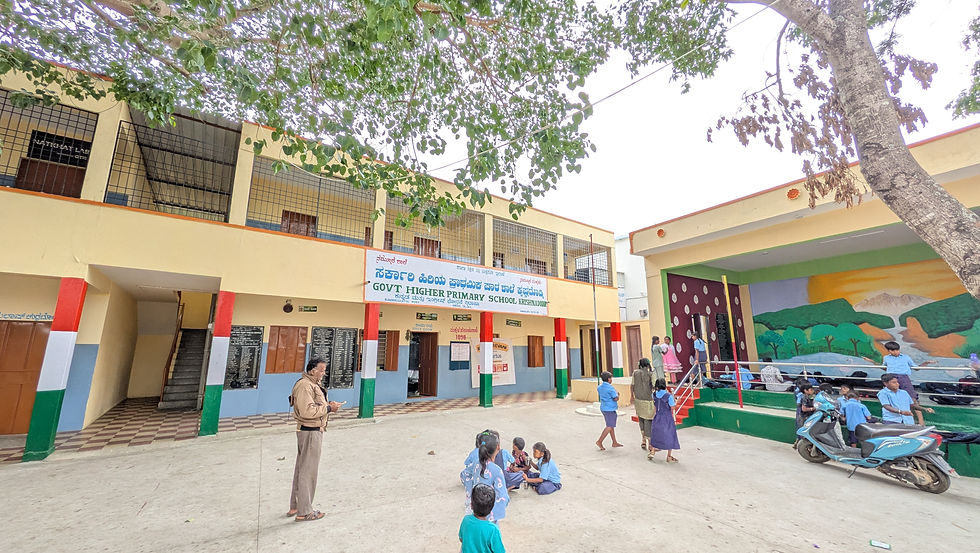
SDG 4 (Quality Education) aligns with Schedule VII clause ii (promoting education including special education and employment-enhancing vocation skills)
SDG 5 (Gender Equality) aligns with Schedule VII clause iii (promoting gender equality, empowering women, setting up homes and hostels for women and orphans, setting up old age homes)
SDG 6 (Clean Water and Sanitation) aligns with Schedule VII clause i (safe drinking water and sanitation)
SDG 13 (Climate Action) aligns with Schedule VII clause iv (ensuring environmental sustainability, ecological balance, conservation of natural resources)
SDG 15 (Life on Land) aligns with Schedule VII clause iv (protection of flora and fauna, animal welfare, agroforestry)
Programmes in these areas can reference the SDG alignment honestly, provided the programme's actual design and outcomes connect to the SDG's targets.
2. Partial Alignments: SDGs That Map to Schedule VII in Some Aspects
Several SDGs align with Schedule VII partially. The alignment holds for specific aspects of the SDG but not the whole.
SDG 8 (Decent Work and Economic Growth) aligns with Schedule VII clause ii on employment-enhancing vocation skills and clause iii on livelihood enhancement for economically backward groups. It does not fully cover the broader SDG 8 scope on labour rights and employment terms
SDG 10 (Reduced Inequalities) aligns with Schedule VII clause iii on reducing inequalities faced by socially and economically backward groups, but does not fully cover the broader SDG 10 dimensions of income inequality
SDG 11 (Sustainable Cities and Communities) aligns partially with Schedule VII clause ii (slum area development) and clause x (rural development projects), but does not fully cover urban sustainability more broadly
SDG 12 (Responsible Consumption and Production) connects partially to Schedule VII clause iv on environmental sustainability, but the SDG's broader scope on production patterns extends beyond typical CSR programmes
Programmes referencing these SDGs should be clear about which aspects of the SDG the programme actually addresses, rather than claiming full alignment with the SDG in its entirety.
3. Gaps: SDGs That Do Not Have a Clear Schedule VII Home
Several SDGs do not map cleanly to Schedule VII. Companies referencing these SDGs in CSR communications should be careful.
SDG 16 (Peace, Justice, and Strong Institutions) does not have a direct Schedule VII home. Some aspects touch clauses on legal aid, but the broader SDG scope on peace and institutions is primarily a government responsibility rather than a corporate CSR area
SDG 17 (Partnerships for the Goals) is a cross-cutting goal about the means of implementing the other SDGs. It does not map to a specific Schedule VII clause because it is about partnership approach rather than programme content
SDG 1 (No Poverty) aligns broadly with Schedule VII clause i and clause iii, but the SDG's full scope on poverty reduction extends beyond what any single CSR programme can genuinely claim
SDG 2 (Zero Hunger) aligns with Schedule VII clause i on eradicating hunger and malnutrition, but the SDG's broader scope on sustainable food systems is not directly covered by typical CSR
SDG 9 (Industry, Innovation, and Infrastructure) partially connects to Schedule VII clause x on rural development, but the SDG's broader industry and innovation scope is not a natural CSR area
SDG 14 (Life Below Water) does not have a direct Schedule VII home. Coastal and marine environmental work may connect to clause iv but is uncommon in Indian CSR
For SDGs in this category, companies should either avoid claiming direct alignment or should be specific about which narrow aspect of the SDG their programme actually addresses.
Five Principles for Genuine SDG Alignment in CSR Programme Design
Beyond understanding which SDGs align cleanly, five principles shape whether a programme achieves genuine alignment or only surface-level mention.
1. Design From SDG Targets, Not From SDG Language
Genuine alignment means designing the programme with specific SDG targets in mind. Each SDG has 8 to 12 specific targets, and each target has specific indicators. Programmes designed to contribute to specific targets are more substantively aligned than programmes that reference the SDG number generically.
2. Align Programme Measurement With SDG Indicators Where Possible
The strongest programmes measure outcomes using indicators that connect to the SDG's official measurement framework. Where the company's programme measures the same or related indicators, the alignment claim becomes defensible. Where the company's measurement is entirely disconnected from SDG indicators, alignment remains at the framing level.
3. Be Specific About Which Aspect of the SDG the Programme Addresses
Most SDGs are broad. A CSR programme rarely addresses the whole SDG. Being specific about which aspect (which target within the SDG) the programme contributes to produces stronger reporting narratives than claiming alignment with the entire SDG.
4. Align With Multiple SDGs Only When the Programme Genuinely Contributes
Some programmes align naturally with multiple SDGs. A rural livelihood programme may contribute to SDG 1, SDG 5, SDG 8, and SDG 10 simultaneously. Some programmes align with only one. Overclaiming multi-SDG alignment when the programme's contribution to some of the claimed SDGs is minimal weakens the credibility of the whole reporting narrative.
5. Include SDG Alignment in the CSR Policy and Annual Action Plan
Companies that include SDG alignment in their CSR Policy under Rule 4(1) and their Annual Action Plan under Rule 5(2) tend to produce more substantive alignment than companies that add SDG language only at the reporting stage. Design alignment is stronger than post-hoc alignment.
Worked Framework Examples: Six SDGs That Map Cleanly
The following six SDGs align most cleanly with Indian CSR under Schedule VII. Understanding how each connects at the framework level supports genuine programme design.
SDG 3 (Good Health and Well-Being)
Schedule VII connection: clause i (promoting healthcare including preventive healthcare) and clause ii where health education is part of educational programmes.
CSR programme types that align: rural healthcare access, preventive healthcare camps, maternal and child health, nutrition programmes, mental health awareness, elderly healthcare, community health worker training.
Alignment discipline: measure outcomes in health terms (people reached, health outcomes documented, sustained programme presence) rather than only in activity terms (camps conducted, sessions held).
SDG 4 (Quality Education)
Schedule VII connection: clause ii (promoting education, including special education and employment-enhancing vocation skills).
CSR programme types that align: school infrastructure, teacher training, digital education access, girl child education, special education, vocational training, adult literacy.
Alignment discipline: measure outcomes in learning terms (learning outcomes documented, retention and completion rates, transition to further education or employment) rather than only in input terms (schools supported, teachers trained).
SDG 5 (Gender Equality)
Schedule VII connection: clause iii (promoting gender equality, empowering women).
CSR programme types that align: girl child education, women's skill development, women's livelihood programmes, women's health, safe spaces and homes for women and orphans, women's leadership development, gender awareness in workplaces and communities.
Alignment discipline: measure outcomes in specific gender terms (girls retained in education, women's incomes documented, women's health outcomes, safe space access) with attention to whether programme benefits are reaching women specifically.
SDG 6 (Clean Water and Sanitation)
Schedule VII connection: clause i (safe drinking water and sanitation).
CSR programme types that align: water source restoration, water quality testing and treatment, community water infrastructure, household sanitation, menstrual hygiene management, wastewater treatment, water conservation.
Alignment discipline: measure outcomes in access terms (households with safe water access, communities served, sustained functionality of infrastructure) with honesty about post-installation sustainability.
SDG 8 (Decent Work and Economic Growth): Partial Alignment
Schedule VII connection: clause ii (employment-enhancing vocation skills) and clause iii (livelihood enhancement).
CSR programme types that align to this partial alignment: vocational skill training linked to employment, livelihood programmes for economically backward groups, self-help group formation and support, small enterprise development.
Alignment discipline: be specific that the alignment is with employment and livelihood aspects of SDG 8, not with broader labour rights or macroeconomic aspects. Measure outcomes in employment and income terms.
SDG 13 (Climate Action)
Schedule VII connection: clause iv (ensuring environmental sustainability, ecological balance, conservation of natural resources).
CSR programme types that align: renewable energy programmes, solar lighting, climate-resilient agriculture, ecosystem restoration, tree plantation with ecological rigour, water-climate programmes, community climate resilience.
Alignment discipline: measure outcomes in climate terms where possible (emissions reduced, ecosystems restored, climate resilience improved) with honesty about the difficulty of attribution at large scale.
How SDG Alignment Connects to BRSR Principle 8 Disclosure
For listed companies subject to BRSR reporting, SDG alignment connects specifically to Principle 8 (business supporting inclusive growth and equitable development). Understanding this connection matters for the reporting narrative.
BRSR Principle 8 essential indicators cover CSR spend, projects undertaken, and impact on affected communities. SDG references within these disclosures should reflect the programme's actual design and outcomes
BRSR Principle 8 leadership indicators include more detailed disclosures on beneficiary reach, geography, and community engagement. SDG framing here should be specific about which targets the programme addresses
BRSR Principle 6 on environment covers environmental disclosures including biodiversity impact. SDG 13, 14, and 15 references may appear here alongside Principle 8 references
The company's broader sustainability report (where produced separately from BRSR) often carries SDG references. Consistency between BRSR disclosures and sustainability report SDG framing supports credibility
Impact assessment reports under Rule 8(3) where applicable can include SDG-linked outcome measurement, provided the assessment methodology genuinely engages with SDG indicators
Companies that produce internally consistent SDG framing across CSR Policy, Annual Action Plan, Board's Report, BRSR disclosures, and sustainability communications tend to produce reporting narratives that hold up better under investor and stakeholder scrutiny than companies that add SDG references inconsistently.
Five Common Mistakes in SDG-Aligned CSR
Across observed practice, five recurring patterns weaken SDG alignment in Indian CSR.
1. SDG Language Layered On Without Design Alignment
The most common mistake is describing existing programmes using SDG language without any change to the underlying programme design. This produces framing alignment without substantive alignment, which weakens under scrutiny.
2. Claiming Alignment With Too Many SDGs
Programmes that claim alignment with 8 to 10 SDGs when the substantive contribution is to 2 to 3 undermine their own credibility. Fewer, better-substantiated alignments are stronger than many surface-level claims.
3. Ignoring the SDG Target Level
Referencing SDGs by number without engaging with the specific targets misses the alignment discipline entirely. Each SDG has specific targets and indicators; alignment happens at the target level, not the SDG level.
4. Inconsistent SDG Framing Across Reports
Companies that reference one set of SDGs in the sustainability report, another set in BRSR disclosures, and a third set in CSR proposals create inconsistency that stakeholders notice. Internal consistency across reporting channels supports credibility.
5. Ignoring the Gaps
Companies that reference SDGs with no clear Schedule VII home in their CSR context risk claiming alignment that they cannot substantiate. Being clear about which SDGs the programme does and does not address is stronger than claiming universal alignment.
Five Suggestions for a Strong SDG-Aligned CSR Programme
The following suggestions reflect practice that produces stronger SDG alignment. They are observations, not prescriptions.
1. Choose Two to Four SDGs for Substantive Alignment
Programmes that engage substantively with two to four SDGs, with genuine design and measurement alignment, tend to produce stronger outcomes and reporting narratives than programmes that claim alignment with eight to ten SDGs.
2. Engage With Specific Targets, Not Just SDG Numbers
Reading the specific targets within each chosen SDG and designing programme components against them produces meaningful alignment. This engagement takes time but produces substance.
3. Align Programme Measurement With SDG Indicators
Where possible, measure the outcomes that connect to SDG indicators, not only the outputs specific to the programme. This connection makes the alignment claim defensible.
4. Include SDG Alignment in the CSR Policy
The CSR Policy under Rule 4(1) is a strong place to articulate which SDGs the company's CSR programme substantively addresses. This upstream declaration shapes downstream design and reporting consistency.
5. Refresh the Alignment Annually
The SDG framework and its targets are stable, but the company's CSR programme evolves. Annual review of SDG alignment as part of the Annual Action Plan process keeps the alignment fresh and honest.
A Note on the Limits of This Article
This article provides operational guidance on CSR alignment with the UN Sustainable Development Goals based on observed Indian practice as of July 2026. It is informational guidance and does not constitute legal, financial, or compliance advice.
The CSR regulatory framework, including Section 135 of the Companies Act 2013, the Companies (CSR Policy) Rules 2014, Schedule VII, and BRSR reporting requirements for listed companies, is subject to amendment. The SDG framework itself may be updated at the UN level. Every alignment claim and reporting decision should be reviewed by the company's CSR Committee, sustainability team, Company Secretary, and Legal counsel with reference to current applicable provisions.
The principles, examples, and suggestions in this article are starting references, not prescriptions, and should be adapted to the company's specific CSR context, programme design, and reporting requirements with professional consultation.
What This Article Is Actually Saying
Three things are worth holding onto.
1. SDG alignment for Indian CSR is partial, not universal. Some SDGs map cleanly to Schedule VII, some map partially, and some do not have a clear home in Indian CSR at all. Companies referencing SDGs in their CSR communications should be honest about which category each SDG falls into for their specific programme.
2. Substantive alignment requires design engagement, not just SDG language. Programmes designed from the start with specific SDG targets and indicators in mind produce alignment that holds up under scrutiny. Programmes that layer SDG language onto existing design produce framing alignment without substance.
3. Two to four substantive alignments outperform eight to ten surface alignments. The credibility of a company's SDG-aligned reporting narrative depends on the depth of the alignment, not the breadth of SDG references. Fewer, better-substantiated alignments serve the company's reporting integrity better.
The companies that build strong SDG-aligned CSR programmes tend to be those that choose two to four SDGs for substantive alignment, engage with specific targets rather than SDG numbers, align programme measurement with SDG indicators, include SDG alignment in the CSR Policy, and refresh the alignment annually. The compounding effect across years, in terms of reporting credibility and stakeholder trust, is meaningful.
Working With Marpu Foundation on SDG-Aligned CSR Programmes
At Marpu Foundation, SDG-aligned programme design is part of how we work with corporate CSR partners. We currently operate across 23+ Indian states, working with 250+ corporate partners, and our programmes span multiple SDG-aligned areas including education, health, water and sanitation, gender equality, livelihoods, and environmental sustainability.
For corporate CSR teams designing SDG-aligned programmes for FY 2026-27 and beyond, the ways we support the work include the following:
SDG-aligned programme design input: Contributing to programme design that connects to specific SDG targets and indicators, not only SDG-level framing
Multi-state operational reach: Enabling SDG-aligned programme delivery across our 23+ state footprint, supporting both concentrated single-geography programmes and multi-state contribution
Measurement discipline: Supporting programme measurement that connects to SDG indicators where possible, with honest documentation of what can and cannot be attributed
Reporting narrative support: Providing the activity-level, financial, and outcome documentation that supports corporate partners' Board's Report drafting, BRSR Principle 8 disclosure for listed companies, and sustainability report narratives
Multi-year programme orientation: Supporting SDG-aligned programmes designed as multi-year interventions where the compound effect on SDG-linked outcomes accumulates
We hold current CSR-1 registration, 12A registration, and 80G registration, and our documentation supports corporate partners' CSR compliance across the annual cycle.
For CSR teams designing SDG-aligned programmes for the coming financial year, write to connect@marpu.org or visit marpu.org. Send a brief note on the SDGs your programme substantively addresses, your target geographies, your programme scale, and your multi-year horizon, and we respond within two working days with programme design input, operational presence details, and a proposal aligned to your priorities.
For CSR teams designing SDG-aligned programmes with any implementation approach, the guidance above is the working reference. Choose two to four SDGs for substantive alignment, engage with specific targets, align programme measurement with SDG indicators, include SDG alignment in the CSR Policy, and refresh annually. The alignment that produces genuine reporting credibility is the alignment designed for it.



Comments